
The Basics of Wave Formation
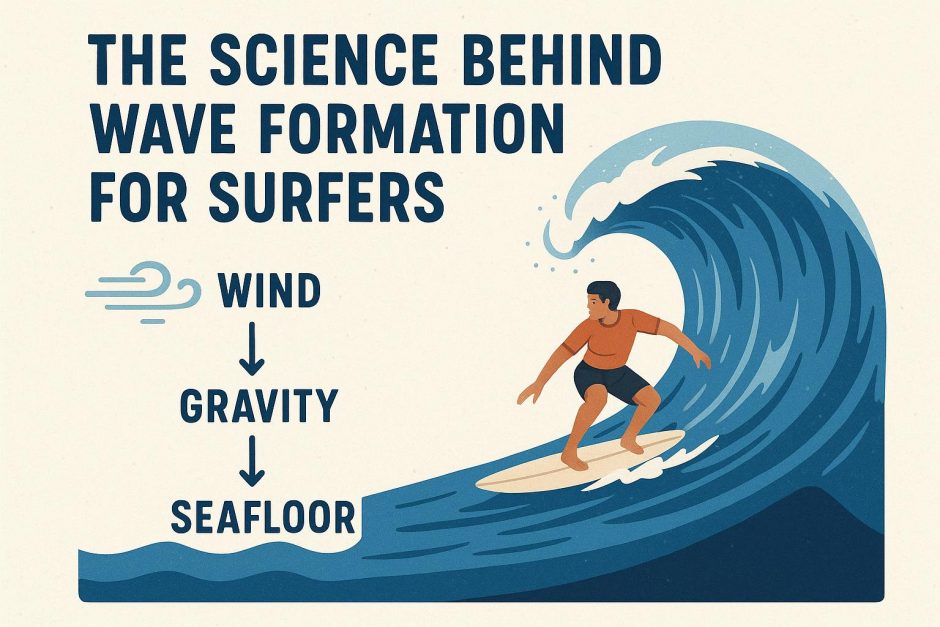
Understanding the science behind wave formation is crucial for surfers looking to improve their skills and make the most of their time in the water. Waves are generated by a variety of natural forces, with wind being the primary factor. The energy from the wind transfers to the water, creating ripples that can grow into larger waves.
Wind: The Primary Force
Wind plays a significant role in wave formation. As wind blows across the surface of the ocean, it generates friction. This friction causes the water to form small, circular motions called wavelets. As these wavelets combine, they form surface waves. The strength, duration, and fetch (distance) of the wind directly influence the size of the waves.
The energy transfer occurs as the wind exerts pressure on the surface water, gradually building up ripples that grow into larger waves. This energy is stored in the form of potential energy on top of the wave crests and kinetic energy as the water particles rotate within the wave structure. The continued effects of consistent, strong winds can lead to the formation of substantial wave systems that are treasured by surfers around the world.
Wave Anatomy
Understanding the anatomy of a wave can help surfers assess conditions more effectively. A wave has several key parts, including the crest (the highest point), the trough (the lowest point), and the wave height (the vertical distance between the crest and trough). The distance between two consecutive crests or troughs is known as the wavelength.
The speed of a wave is determined by its wavelength and the period, which is the time needed for two consecutive crests to pass a fixed point. These factors all play into wave energy, which informs surfers about the kind of waves they are likely to encounter in different conditions. A strong understanding of these aspects allows surfers to optimize their approach to each wave, choosing when to paddle, when to stand, and how to maintain balance while riding.
Swell Formation
Away from the immediate effect of local winds, swells are formed. Swells are groups of waves that have traveled out of the area of their generation. They are influenced by wind strength, wind duration, and fetch. When the wind stops or changes direction, the swells continue to travel, sometimes across entire ocean basins.
The formation of swells involves intricate processes. As wind-energy waves travel far from the source, they gather energy and synchronize, leading to a uniform wave pattern that can journey vast distances. Swells, therefore, reflect the behavior of wind conditions from possibly thousands of miles away, and their orderly appearance indicates a steady, long-lasting wind in their place of origin. These characteristics make swells more predictable, giving surfers a reliable insight into surfing conditions across various coastal locations.
Breaking Waves and Surf Spots
As swells reach shallower waters near coastlines, the interaction with the ocean floor causes them to slow down and increase in height, leading to breaking waves. The topographical features of the ocean floor, such as reefs, sandbars, and points, influence the shape and size of the breaking waves, creating ideal surf spots. The type of break significantly influences the type of ride a surfer can expect. Point breaks, reef breaks, and beach breaks each offer unique challenges and opportunities for surfers.
The interaction between the wave and the seabed is critical during the breaking process. As a wave approaches shallower depths, its base slows due to friction, while the top continues at speed, causing the wave to rise sharply and eventually break. The abruptness or gradual nature of the bottom, along with the angle, affects how the wave collapses. This is crucial for surfers when deciding where to surf, as different breaks offer distinctive challenges, whether it’s the hollowness of a barrel at a reef or the ever-shifting dynamics of a beach break.
For more in-depth insights, resources such as the National Geographic provide comprehensive information on the dynamics of wave formation.
By understanding these scientific principles, surfers can enhance their ability to read ocean conditions and harness the waves effectively. Observing wave patterns along with weather forecasts becomes essential for predicting optimal times for surfing, leading to an improved overall surfing experience.
With the right knowledge, surfers can identify and adapt to changing maritime environments, recognize the ideal conditions for surfing, and ensure safety as much as enjoyment when out in the waves. A foundational understanding of wave formation not only fosters better surfing skills but also nurtures a deeper connection to the ocean and the forces that shape it.