
Understanding Canoeing
Canoeing has long established itself as a much-loved water sport, allowing enthusiasts to enjoy the tranquility of nature, the challenge of paddling, and the potential for adventure. As a pastime, it involves navigating a water body using a canoe, propelled by the human effort of paddling with a single-bladed paddle. The craft itself, described as being open-decked and elongated with pointed ends, offers versatility in use and can accommodate solo paddlers or be paddled with others, depending on the size and requirement. In the history annals, canoes have been integral to human civilization, serving crucial roles ranging from mainstay transportation means, facilitating trade, and furthering exploration feats globally.
Key Features of Canoes
Canoes present unique design elements that distinguish them from other forms of watercraft. They are characterized by their open-top design, which provides ample space for passengers, equipment, and supplies. The lightweight nature of canoes makes them favored choices for those who prioritize both ease of transportation and maneuverability in diverse water conditions. Availability in a range of materials such as traditional wood, modern aluminum, fiberglass, or kevlar, offers options suited to durability and efficiency preferences. The choice of material impacts the canoe’s weight, speed, resistance against environmental wear, and maintenance requirements, each influencing buyers’ decisions based on their intended usage scenarios.
Paddling Techniques
Mastering paddling techniques is essential for efficient canoeing. The fundamental tool here is the single-bladed paddle, which necessitates skill and coordination to achieve a balanced and steady movement across the water. A popular technique known as the “J-stroke” comes in handy to maintain a straight path—this involves a specific twist at the end of a paddle stroke. Coordination, especially in tandem paddling scenarios, becomes multiply important to maintain direction and enhance stability. Effective communication and synchronization between paddlers become vital to avoid potential mishaps and have an enjoyable canoeing experience.
How Canoeing Differs from Kayaking
Though both canoeing and kayaking are venerable forms of paddle sports with rich histories, distinct differences set them apart in various dimensions like vessel design, techniques employed, and purposes served, each conferring a unique experience upon the practitioner.
Design Differences
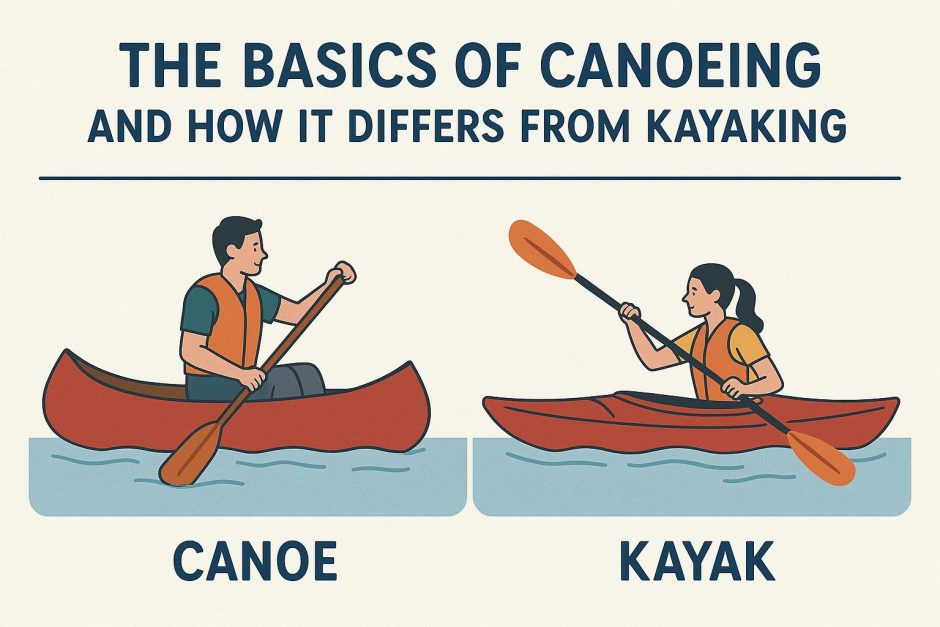
The structural design variances between a canoe and a kayak are visually apparent and fundamental to the differing experiences they provide. A canoe is mostly open-decked, allowing paddlers the choice to either sit or kneel, offering a sense of openness and flexibility. In contrast, a kayak comprises a closed deck and includes a cockpit wherein the paddler sits comfortably with their legs extended forward. These differences in design influence the inherent stability, with canoes often seen as more stable with more manageable tipping risks. Speed may be more influenced by the skill and strength of the paddler, notwithstanding each craft’s inherent characteristics.
Paddling Techniques and Equipment
The clear divergence in paddling equipment is emblematic of the two sports’ unique demands. In kayaking, a paddler makes use of a double-bladed paddle, enabling fluid alternating strokes without necessitating a switch of hand positions. The paddling methodologies in kayaking extensively rely on the torso and core muscles for power generation, whereas canoeing’s techniques predominantly use arm and upper body strength. This differential creates varying dynamics and energy requirements in either sport, guiding enthusiasts according to their physical prowess and training interests.
Purpose and Usage
The scope of activity and the overarching purpose between canoeing and kayaking often guide enthusiasts’ choices. Canoeing lends itself well to leisure activities such as fishing, picnicking on the water, or gentle explorations along placid river expanses. Its spacious interior is ideal for carrying additional passengers and gear, favoring exploratory trips and expeditions over calmer waters. In contrast, kayaking is frequently associated with sport, recreation, and more extreme pursuits, including thrilling whitewater runs, sea kayaking adventures, and competitive racing, thanks to its compact and maneuverable design.
Choosing Between Canoeing and Kayaking
When faced with the decision of whether to pursue canoeing or kayaking adventures, several key points warrant consideration. Analyzing the intended water activity experience, current skill level, and physical capability play vital roles in making an informed choice. Canoeing is suggested as an optimal choice for those aiming for a relaxed outing or journeys that necessitate accommodating several passengers and additional gear. For individuals with a penchant for speed, the appeal of navigating narrower water corridors, or those drawn to competitive water sports, kayaking emerges as more suited to those pursuits.
Ultimately, both canoeing and kayaking offer rich and rewarding experiences in their own rights, bringing people closer to natural wonders, invigorating their spirits, and challenging their physical and mental capacities. Whether seeking serene passage through nature’s offerings or the adrenaline of tackling rapid waters, both ventures stand ready to deliver unparalleled aquatic experiences. For more guidance on beginning a paddle sport journey or enhancing existing skills, exploring professional paddling organizations, frequently online, is highly encouraged.