
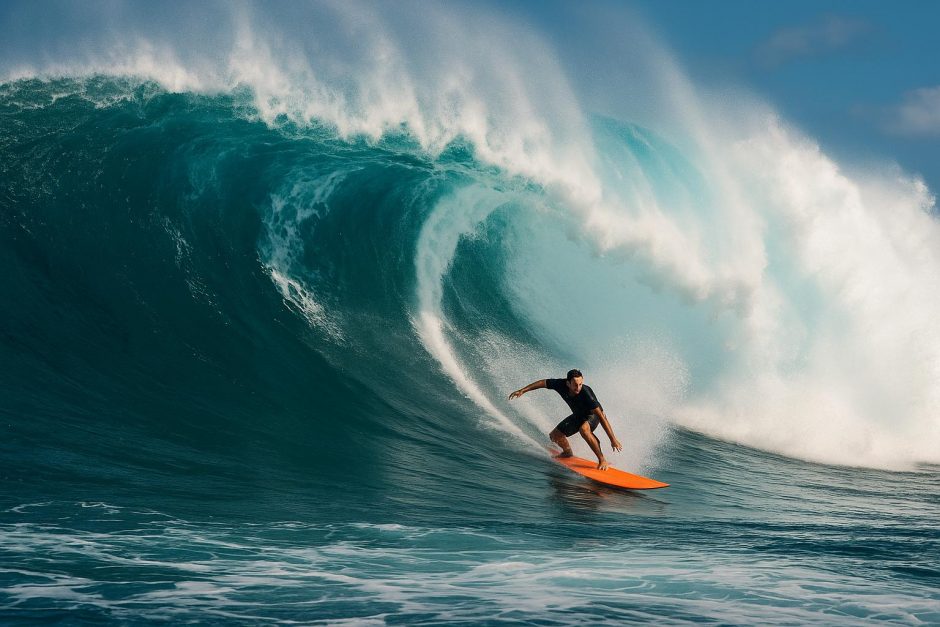
The Challenge of Big Wave Surfing
Big wave surfing is a complex and demanding sport that pushes the boundaries of human endurance and skill. Going beyond standard surfing, this extreme version involves riding waves that are at least 20 feet high, with some waves reaching even greater heights. The unique conditions required for big wave surfing present a multitude of challenges and necessitate specialized skills and techniques, making it both one of the most exhilarating and perilous water activities in the world.
Notable Big Wave Locations
Big wave surfers are known for their dedication, frequently traversing the globe in search of the perfect wave. Several locations are notable for their ability to produce the massive waves coveted by these intrepid athletes. Each location offers unique characteristics and challenges for big wave surfing.
Mavericks, California: Situated near Half Moon Bay, Mavericks is renowned for its unpredictable and often harsh conditions. Waves at Mavericks have been known to soar over 60 feet, making it a premier destination for expert surfers. The wave is largely dependent on the direction of winter storms, which generate the ocean swells necessary for these colossal waves.
Jaws, Hawaii: Known locally as Peʻahi, this surf spot on Maui’s north shore is famous for its fast-moving and challenging waves. Jaws attracts some of the best surfers from around the world as it produces incredibly powerful waves. The rapid pace and sheer size demand exceptional technique and courage from those who dare to ride here.
Nazaré, Portugal: In recent years, Nazaré has gained fame for producing some of the largest surfable waves globally, with recorded heights exceeding 80 feet. This is largely due to the underwater Nazaré Canyon—a deep oceanic trench that amplifies incoming swells. As such, Nazaré has become a hotspot for those looking to push the envelope in big wave surfing.
Essential Equipment for Big Wave Surfing
Traditional surfing equipment proves insufficient when facing the immense forces at play in big wave surfing. To manage the substantial power and speed of these waves, surfers rely on specialized gear.
Surfboards: The surfboards designed for big waves, often referred to as “guns,” are distinctively longer and heavier than standard boards. This design aids surfers by offering better control and increased speed, critical when navigating the large and fast-moving waves of big wave locations.
Safety gear: The role of safety equipment cannot be overstated in big wave surfing. A life vest becomes indispensable for flotation, reducing the risk of drowning. Inflatable vests have grown in popularity due to their promise of added buoyancy at the pull of a cord. Furthermore, the leash, a crucial accessory that attaches the board to the surfer, helps in retrieving the board quickly after wipeouts, which are common in big wave surfing scenarios.
Jetskis: Tow-in surfing, a technique that has revolutionized big wave surfing, involves the use of jetskis. These vehicles enable surfers to catch waves that would be otherwise impossible to paddle into due to their speed. A jetski driver tows the surfer into the wave, ensuring they can catch it at just the right moment.
The Role of Weather and Ocean Conditions
The influence of weather and ocean conditions on big wave surfing cannot be emphasized enough. Surfers closely monitor various parameters to predict the formation of large waves accurately. Swell forecasts are crucial, as they provide insights into when and where the best waves are likely to manifest.
Swell size serves as a primary factor; small deviations can drastically affect whether a wave will be surf-worthy. Wind direction also plays a vital role; onshore winds can ruin a wave’s shape, while offshore winds help to create ideal surfing conditions by keeping the waves clean and well-formed.
Tide levels further influence the quality of the waves. High tides may swallow some spots, making them unsurfable, whereas low tides can expose dangerous rocks and reefs. Thus, timing and location, taking into consideration these factors, are critical for surfers seeking the thrill of riding big waves.
The Risks Involved
Big wave surfing, while thrilling, comes with inherent and substantial risks. The overwhelming force exerted by these massive waves can lead to severe injuries or even fatalities. One of the most significant threats is being held underwater, sometimes by successive waves, which can lead to drowning.
Collisions pose another risk, whether it’s colliding with the ocean floor or other surfers. Being struck by one’s board during a fall is also a concern. These potential dangers necessitate a high level of physical fitness, mental resilience, and extensive experience in those aiming to participate in big wave surfing.
The discipline, preparation, and deep understanding of oceanic conditions make big wave surfing a specialized and revered branch of the surfing sport. While the challenge and allure of riding these formidable natural forces draw many surfers each year, they must approach with the utmost respect and preparedness to navigate the sport’s inherent dangers safely.
For further detailed information on big wave surfing, including up-to-date conditions for various surf spots around the globe, you may consider visiting resources such as the Surfline website. They offer comprehensive reports and insights tailored to help surfers make informed decisions regarding their pursuits in big wave surfing.