
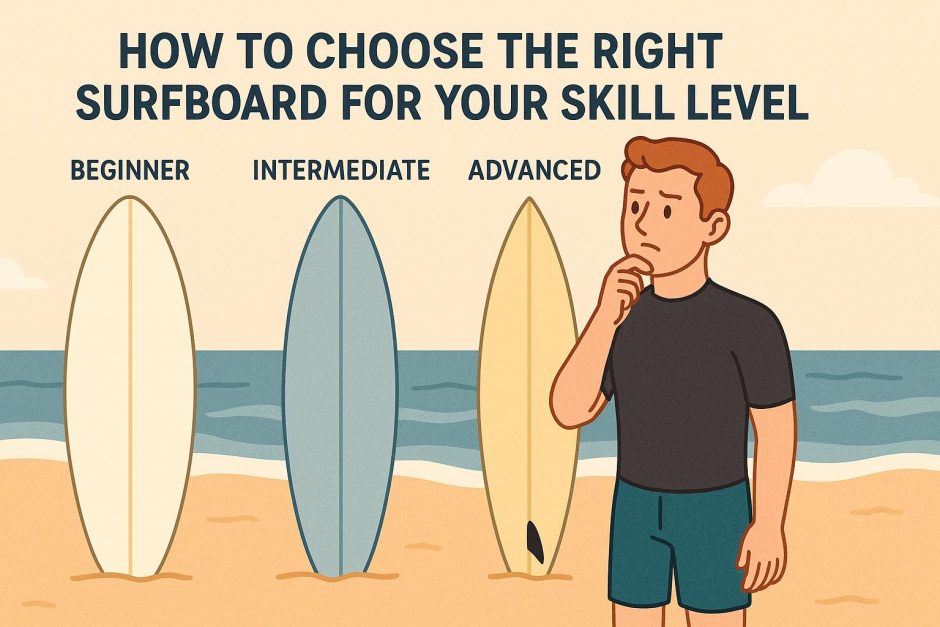
Identifying Your Skill Level
Before embarking on the selection process for a new surfboard, it’s imperative to assess your skill level accurately. This awareness of whether you are a beginner, intermediate, or advanced surfer serves as a cornerstone of making an informed decision when it comes to choosing a surfboard that is best suited for you. Each level of ability comes with its own set of requirements and preferences, which should guide your decision-making process.
Beginner Surfers
For individuals just diving into the world of surfing, the beginner stage is characterized by learning foundational skills. These include mastering the basics of paddling, maintaining one’s balance, and the initial stages of wave catching. At this level, safety, stability, and simplicity are key. A surfboard that provides substantial buoyancy and stability is crucial. A foamboard or a longboard meets these needs excellently. The forgiving nature of these boards allows for mistakes and promote a gradual learning curve, encouraging proper technique development over time without excessive risk.
Intermediate Surfers
As you progress and become an intermediate surfer, you will have developed a sound understanding of basic surfing concepts and better confidence in varying surf conditions. The primary objective at this stage is to enhance your maneuverability and speed on the waves. Therefore, selecting a board that offers a balance between stability and versatility is advantageous. A funboard or a mini-mal is typically well-suited for intermediates. These boards provide ample opportunity to experiment with more complex surfing maneuvers while maintaining enough buoyancy and control to instill confidence.
Advanced Surfers
When you reach the advanced level, your comprehension of various surf conditions and techniques becomes quite refined. The selection of a surfboard at this stage pivots towards performance. Advanced surfers often seek boards that offer high responsiveness and the capacity to navigate more challenging waves. A shortboard or a performance board generally meets these requirements effectively, providing the agility and precision needed for tackling steep and powerful waves.
Types of Surfboards
Understanding the different types of surfboards is crucial for selecting the right one to match your skill level and local surf conditions. Each board type has unique features impacting factors like balance, speed, and maneuverability, which should be aligned with your surfing goals.
Foamboards
Foamboards are especially recommended for beginners due to their excellent buoyancy and ease of handling. These boards foster a forgiving and safe environment for those learning to surf. Typically measuring between 6 to 9 feet in length, foamboards offer ample surface area, promoting smooth paddling and easier wave catching. Their soft exterior minimizes injury risk, making them a prime choice for new surfers.
Longboards
Longboards, known for their substantial length—ranging from 8 to 12 feet—provide remarkable stability. They are versatile and cater to a range of skill levels. Particularly effective in smaller wave conditions, longboards are ideal for those seeking a leisurely and stable ride. They also serve budding surfers learning complex balance techniques such as cross-stepping and nose riding.
Funboards
Intermediate surfers often find funboards to be an excellent choice, due to their balance of length and width, ranging from 6.5 to 8.5 feet. This particular design allows intermediates to hone their turning abilities and attempt more technical maneuvers. Funboards effectively bridge the gap between longboards and shortboards, offering enhanced control while still maintaining some elements of stability.
Shortboards
Shortboards are synonymous with speed and agility, making them the preferred option for advanced surfers dealing with more challenging surf conditions. Typically shorter and more pointed, these boards enable tight turns and swift maneuvers. They are engineered to manage steep, powerful waves efficiently, thus appealing to surfers aiming for high-performance sessions.
Factors to Consider
In addition to one’s skill level, several other factors are vital when determining the most suitable surfboard.
Wave Conditions
Local wave conditions play a significant role in determining the appropriate surfboard. In regions with smaller waves, opting for a larger board can offer greater stability and facilitate longer rides. Conversely, areas with robust waves justify the use of smaller, more maneuverable boards designed for quick and responsive turns.
Body Size and Weight
Your physical stature can markedly affect how you interact with your surfboard. Surfers with greater height or weight may benefit from larger or thicker boards, which provide the necessary buoyancy and support to effectively manage their body mass on water.
Volume
The concept of volume, expressed in liters, expresses the buoyancy capacity of a board. Beginners, in particular, should consider boards with higher volume, as they simplify balancing and aid with paddling efficiency. As one’s proficiency grows, a lower volume board can offer enhanced maneuverability and control.
Conclusion
Choosing the right surfboard is a decision intertwined with understanding your skill level, environmental surf conditions, and personal physical characteristics. This decision evolves alongside your progression within the sport, aligning your board choice with your advancing skills and surfing aspirations. For a tailored recommendation, reaching out to experts at local surf shops or consulting experienced surfers for their insights can be immensely beneficial. They can provide personalized advice, ensuring that your surfboard selection supports your outdoor adventures and growth as a surfer.