
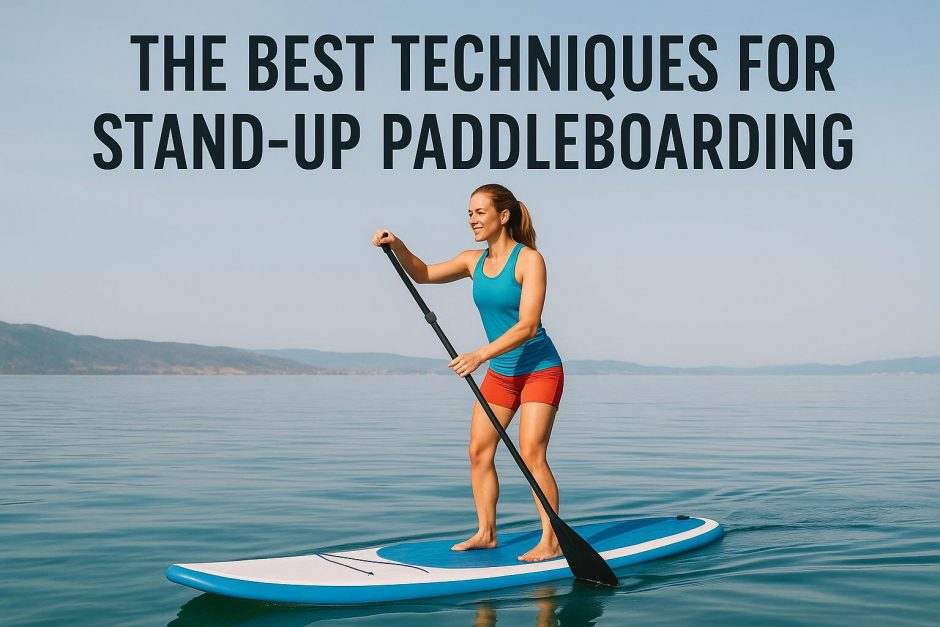
Understanding the Basics of Stand-Up Paddleboarding
Stand-up paddleboarding (SUP) has emerged as a preferred choice among water enthusiasts. This exhilarating activity integrates elements from both surfing and kayaking, offering a distinct blend that encourages fitness, exploration, and fun. Whether you’re gliding across a tranquil lake or tackling the ocean surf, understanding fundamental techniques can significantly enhance your stand-up paddleboarding experience.
Selecting the Right Equipment
An optimal stand-up paddleboarding experience begins with the right equipment, which lays the foundation for comfort and performance. Your choice of gear greatly influences your overall experience, so it is essential to make informed decisions:
Paddleboard: The paddleboard is arguably the most crucial piece of equipment. Boards are available in various materials, shapes, and sizes. Beginners typically benefit from wider boards as they offer greater stability, making it easier to maintain balance. The type of paddling you intend to do, whether leisurely or competitive, will also influence your choice. For instance, touring boards are longer and narrower, ideal for speed and covering larger distances. Surf-style boards are shorter and more maneuverable, more suited for riding waves. When selecting a board, your weight and skill level are critical factors to consider.
Paddle: Unlike the single-bladed paddle used in canoeing, stand-up paddles are designed for ease of use while standing. An adjustable paddle is particularly advantageous, allowing you to modify the length according to your height. This adjustability ensures that the top grip comfortably reaches between 6 to 10 inches above your head, promoting efficient strokes and reducing fatigue.
Leash and PFD: Safety in water-based activities is paramount, and the leash and personal flotation device (PFD) are your lifelines. The leash ensures that should you fall off, the board remains tethered to you, preventing it from drifting away. This is particularly important in waters with currents or waves. In many regions, wearing a PFD is mandatory, ensuring buoyancy and elevating overall safety.
Proper Stance and Balance
Grasping the proper stance is vital to maintaining balance on a paddleboard. It serves as the foundation for your mobility and stability on the water:
When mounting the board, position yourself centrally, ensuring your feet are placed hip-width apart. This positioning optimizes balance. Slightly bending your knees acts as a shock absorber, aiding in stability especially when confronted with waves or choppy water. An upright posture, with your back straight, not only aids in balance but also ensures that your core muscles, crucial for maintaining stability and making efficient strokes, are engaged. Initially, practicing these techniques on calm waters helps build confidence and establishes a solid foundation.
Paddling Techniques
Mastering paddling techniques can mean the difference between a leisurely session and an exhausting one. Efficient paddle strokes maximize propulsion while minimizing fatigue:
Forward Stroke: As the fundamental stroke in paddleboarding, the forward stroke propels you across water efficiently. Begin by reaching forward with the paddle, dipping the blade into the water close to the board’s nose. Pull the paddle back, parallel to the board’s side. Rather than relying heavily on your arms, engage your torso for the motion, enabling a more powerful yet energy-efficient stroke.
Reverse Stroke: The reverse stroke serves as a mechanism to decelerate, halt, or shift direction. By pushing the paddle blade forward in the water and pulling it towards the board, you can effectively control your movement. Mastery of this stroke equips you with greater control and confidence on the water.
Sweep Stroke: Essential for maneuvering, the sweep stroke allows you to turn the board seamlessly. By extending the paddle in a wide arc away from the board, you can pivot, directing it as desired. Familiarity with this stroke enhances navigational control, especially in tight spaces or when coursing through winding waterways.
Advanced Techniques
Once comfortable with the basics, paddleboarding offers a range of advanced techniques that add depth and agility to your water adventures:
Pivot Turn: To execute a rapid change in direction, transfer your weight to the rear foot. This elevates the board’s nose slightly. Simultaneously, employ a sweep stroke, enabling swift maneuverability.
Cross-bow Stroke: For agile directional transitions, migrate the paddle across the front, instead of the conventional side sweep. This technique is invaluable for those seeking more dynamic control.
Step-Back Turn: Similar to a surfing stance, this involves moving one foot backward, giving you greater control for abrupt turns. It’s particularly useful when navigating through waves or complex water conditions.
Stand-up paddleboarding transcends its title as a mere sport or recreational activity. It presents a holistic workout, exercising core muscles and promoting overall fitness. Moreover, it serves as a gateway to exploring diverse aquatic environments, from pristine lakes to expansive seas. With consistent practice and proper technique, stand-up paddleboarding transforms into a rewarding pursuit, blending leisure with exercise in a harmonious balance. Whether you’re dabbling as a hobbyist or aspiring to take on challenging waters, the sport offers something for everyone, irrespective of age or skill level.