
Introduction to Dragon Boat Racing
Dragon boat racing is a water sport with ancient roots and a rich cultural legacy that has evolved into a modern competitive activity. Originating from China, this vibrant and visually striking sport involves teams paddling in unison in long, narrow boats adorned with dragon designs. Historically, dragon boat racing is deeply linked to Chinese traditions and festivities, particularly the Duanwu Festival, also known as the Dragon Boat Festival.
Historical Origins
The origins of dragon boat racing date back over 2,000 years. Historically, it serves as a significant cultural ritual in ancient Chinese civilization. It is thought to have originated as a way to honor the legendary poet and statesman Qu Yuan. Faced with political despair and personal loss, Qu Yuan drowned himself in the Miluo River. Local villagers reportedly raced out in boats to rescue him or at least recover his body, beating drums and splashing the water with their paddles to scare away fish and evil spirits. This event gradually evolved into the competitive sport known today.
Significance in Chinese Culture
Dragon boat racing, aside from being a sport, also plays a crucial role in maintaining cultural identity and tradition. The event takes place during the Dragon Boat Festival, celebrated on the fifth day of the fifth month of the Chinese lunar calendar. This festival not only commemorates Qu Yuan’s life and death but also acts as an occasion for communities to engage in a range of folk rituals and activities. These include eating specific foods like sticky rice dumplings, known as zongzi, and setting off firecrackers.
Traditional Elements
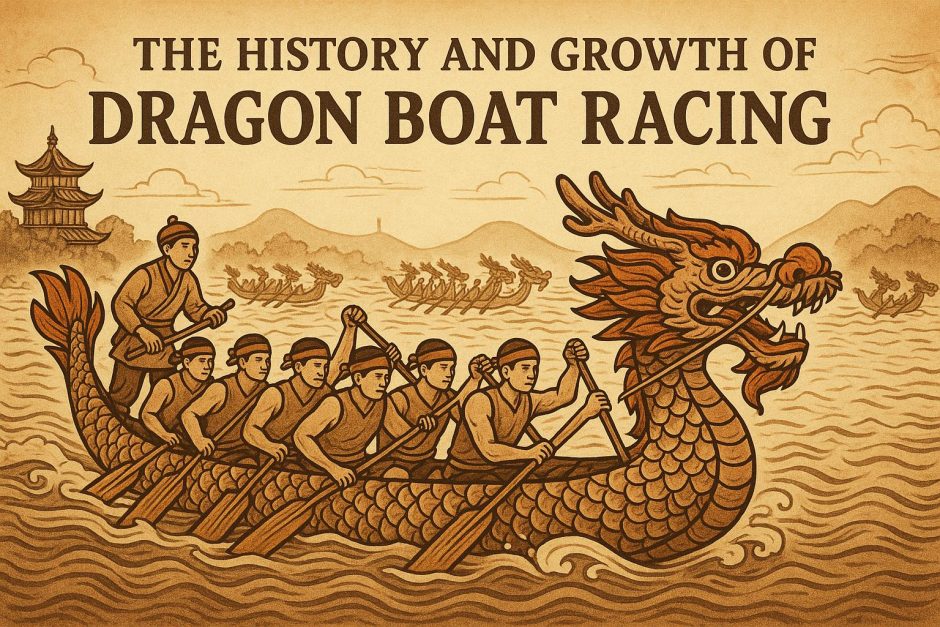
The boats themselves are an essential part of the tradition. Typically constructed of teak wood in ancient times, they are now often made from modern materials but retain the traditional dragon motif. The prow is shaped like a dragon’s head, and the stern resembles a tail, embodying the mythical creature’s power and majesty. Each boat often carries a drummer who sits at the helm, setting the pace for paddlers by rhythmically beating a drum.
Modern Growth and International Expansion
In recent decades, dragon boat racing has transformed from a primarily cultural event into a global competitive sport. With the introduction of standard race formats and the formation of international governing bodies, the sport has grown significantly.
Formation of Global Governing Bodies
The international expansion of dragon boat racing was formalized in 1991 with the establishment of the International Dragon Boat Federation (IDBF). The IDBF has been instrumental in setting standardized rules for competitions and promoting the sport across various continents, ensuring consistency and fairness in international events.
Competitive Scene
The competitive scene for dragon boat racing is diverse and dynamic, featuring both amateur and professional teams. Competitions are held worldwide in locations including Europe, North America, and Asia. These events range from small local contests to large-scale international championships, such as the biennial World Dragon Boat Racing Championships.
Development and Training
As the sport has expanded, so too has the level of training and specialization among teams. Athletes often undergo rigorous physical training to excel in strength, endurance, and technique. Many teams practice year-round, honing their skills to stay competitive. This dedication reflects the emphasis on conditioning and preparation, comparable to other well-established competitive sports.
Equipment and Safety
With the modern evolution of the sport, advancements in equipment and safety gear have become integral. Traditional boats have seen adaptations to include durable materials that enhance performance and safety. Safety measures, including life vests and adherence to waterways regulations, have become standardized, ensuring that races run smoothly and securely no matter the location.
Cultural Impact and Popularity
Dragon boat racing has witnessed a surge in popularity not only as a sport but also as a cultural phenomenon. The vibrant and team-oriented nature of the sport has captured the interest of diverse communities around the world. It serves as a unique cultural bridge, bringing people together from different backgrounds to celebrate camaraderie and teamwork.
Community and Team Building
The team-based structure of dragon boat racing lends itself well to fostering community spirit and cooperation. Training and competing in unison, teams develop strong bonds and a sense of unity, which appeals to both newcomers and seasoned paddlers alike. Corporate teams and community groups often participate in races, emphasizing the sport’s role in enhancing teamwork and boosting morale.
Impact on Waterfront Communities
As dragon boat events are often held on rivers, lakes, and coastal areas, they positively impact waterfront communities. Such gatherings stimulate local economies, drawing visitors and participants who patronize local businesses. Festivals held alongside the races highlight the cultural richness and traditions associated with the sport, offering educational opportunities and showcasing local crafts, foods, and music.
Environmental Awareness
With dragon boat races typically occurring in natural water bodies, the sport has also taken on an environmental dimension. Many dragon boat events collaborate with environmental organizations to promote sustainability and water conservation. Participants and spectators alike are educated on the importance of protecting these aquatic environments, reinforcing the broader societal benefits of engaging in this sport.
Conclusion
The history and growth of dragon boat racing underline its significance as both a cultural heritage and a growing international sport. Originating from ancient Chinese traditions, it has successfully navigated its way into the contemporary sporting world while maintaining its rich cultural roots. As it continues to gain popularity, dragon boat racing not only celebrates athleticism and competition but also promotes cultural exchange and community bonding worldwide.